Warning Signs in Trump’s Wind Energy Campaign
This week, the Trump administration presented plans to revoke approval for two large wind farm projects off the coast of New England. With an estimated value of nearly $15 billion, the project has been a major success for the region, providing a useful source of new electricity amidst surging demand.
Trump’s move was the latest in a series of attacks on the American wind energy industry. At first glance, it’s easy to see this primarily as an attack on clean energy and climate change efforts, and that’s certainly a big part of the picture.
However, if we step outside the climate bubble a bit, the overall push against wind energy goes beyond just an anti-climate move. By targeting ongoing investments, in some cases nearing completion, Trump’s move strikes at the core of the free market and private enterprise. While previous administrations have certainly changed subsidies and tightened or loosened regulatory requirements, targeting projects under construction represents an unprecedented level of regulatory uncertainty, threatening the foundations of America’s critical infrastructure construction and placing the whims of government at the center of the equation.
In climate and energy circles these days, it’s almost taken for granted that wind power has become the ugly duckling of clean energy, even as other renewables face a bright future despite a hostile administration. Indeed, the economy and growing energy demand should continue to create opportunities for solar and battery storage. But the speed and scale of the effort to curtail wind power confirms that nothing is safe.
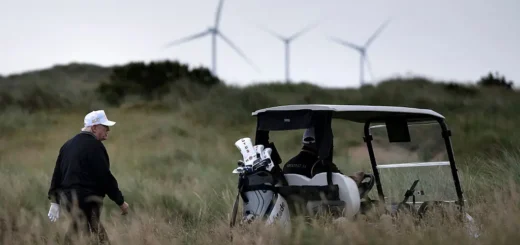
Trump’s anti-wind power stance dates back long before he took office for a second term in January. In his days as a property developer, he complained that wind turbines off the coast of Scotland were harming business on his seaside golf course. Over the past decade, he has issued a series of blistering statements condemning the energy source for everything from killing birds to being simply ugly. In other words, whatever political justifications the administration may offer, the opposition is, at least in part, personal.
In Trump’s first term, the administration sought to support coal and block renewable energy projects, with varying success and commitment. But this time, it was different. In the early days of his new term, the Trump administration halted the issuance of new offshore wind energy permits and began reviewing existing leases on federal land designated for wind energy development. Since then, the administration has slashed clean energy tax credits, imposed tariffs on parts of the wind energy supply chain, and launched, without providing any details, a national security investigation into offshore wind energy.
The unprecedented attack on projects already licensed or under construction has been the most visible and visible. The projects targeted this week—New England Wind 1 and 2—received permits last year. The company building Revolution Wind, which is about 80% complete, received a stop-work order in August, citing “national security” concerns. Earlier this year, the administration temporarily halted construction of Empire Wind, another megaproject off the coast of New York. The White House allowed construction to resume after the governor approved a new natural gas pipeline. In all of these cases, billions of dollars of private financing are at risk—investments carefully calculated under a consistent legal framework.
“Permitted energy projects, of any type, should not be halted at this late stage,” wrote Martin Durbin, senior vice president of policy at the U.S. Chamber of Commerce, in a September 3 blog post. “Revoking wind energy permits today opens the door to uncertainty for all types of energy projects in the future.”
It’s a telling warning from the U.S. Chamber of Commerce, a business lobby with historical ties to the Republican Party. Trump’s wind energy agenda is a message to anyone making a major capital investment: the success of your project may depend on Trump’s approval. Under these conditions, it will be difficult not only to invest in a large-scale energy transition but also to build much of the necessary infrastructure that requires significant investment—impeding efforts to address climate change and foster economic growth.