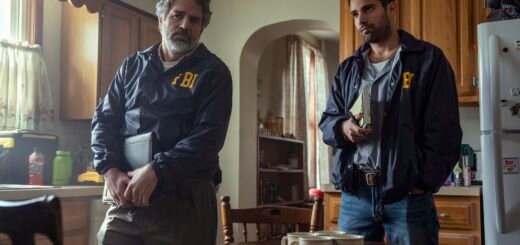
Watch Black Rabbit starring Jude Law and Jason Bateman
Jude Law and Jason Bateman’s brotherly friendship is one reason you should watch the thriller Black Rabbit on Netflix.
Black Rabbit is the kind of Manhattan restaurant that almost always gets described as a club. Located in the armpit where Roosevelt Avenue meets the Brooklyn Bridge, this fictional, multi-story restaurant, which gives the Netflix thriller Black Rabbit its title, boasts a historic location, a stellar menu, a celebrity co-owner, a decor that splits the line between shabby chic and bohemian, and a well-dressed clientele who treats its VIP room like a second home. As its owner, the charismatic former rocker Jake Friedkin (executive producer Jude Law), explained to the crowd gathered there for a fine jewelry presentation, this is “a place you can go anywhere tonight.” And almost immediately, it does. Two masked robbers storm the party, pointing guns at people and demanding jewelry.
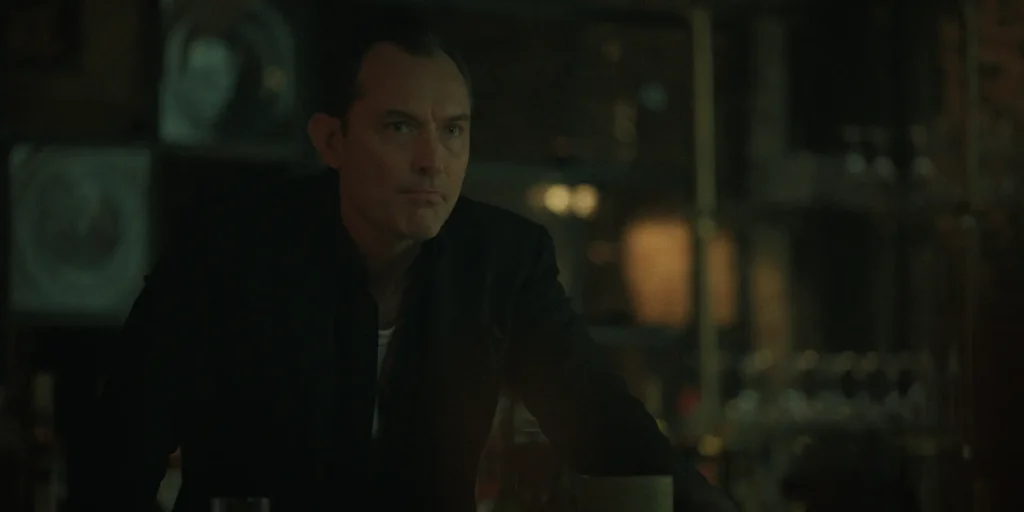
After this elegant and lively introduction, “Black Rabbit” takes viewers on a month-long journey through time to trace the complex origins of a robbery that raises some pressing questions—why, for example, do the perpetrators have a key to the restaurant’s locked gate?—and continues until the series’ finale. The trouble seems to begin when Vince, Jake’s mischievous older brother (played by executive producer Jason Bateman, who also directed the first two episodes), returns to town after a stint in Reno that ended with him running over a man trying to steal the rare coins he was selling from a casino parking lot. Considering how much money and anxiety Vince has cost him over the years, it’s hard to understand why the hard-working and organized Jake not only pays for his ticket home but also welcomes him into the Rabbit Bar.
The basis of their complex relationship, more than the story behind the opening scene, is the series’ gripping mystery. When the film focuses on its two main leads, especially when they’re competing against each other, “Black Rabbit,” out September 18, can be captivating. But creators Zach Palen (King Richard, Creed III) and Kate Sussman’s choice to overload their script with plot rather than using that time to delve into the story’s many secondary characters mars the brothers’ world. Despite being filmed on location, this New York is a city with archaic forms that could have supported a feature film, but it can’t support an eight-hour series.
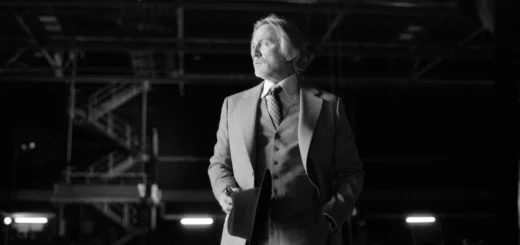
You can see why Bateman and Law were excited enough to endorse this project as producers. Their roles are brilliant and rich, the kind that even male actors can struggle to find once they reach their fifties. The Friedkins, native New Yorkers raised in working-class Coney Island, rose from a chaotic home to become stars of the city’s 2000s rock renaissance with their band, the Black Rabbit. (A black-and-white music video of the duo performing their hit song, which adds a dose of humor to a show that could have benefited from more, suggests they were a missing link between Nirvana and the Strokes.) At the height of their fame, Jake was the glamorous girl, ready to play the role the music industry had chosen for him, while drummer Vince was the artist—and the liability of his drug abuse. This dynamic has continued to the present. Before bringing his charm and work ethic to the Rabbit, Jake managed a renowned multi-talented artist, Wes (Soup Diriso), who is now a partner in the restaurant. But Vince was the dreamer who saw the potential in such a dilapidated space that he would eventually be too busy drinking, snoring, and gambling away the equity in their family home to help with the transformation.
This duality, between the sweat-sodden hard worker and the tormented genius, isn’t exactly new. So it’s refreshing to see Palen and Sussman complicate it, challenging our expectations by exploiting the biting irony inherent in Law’s distinctive performance and the cracked kernel of civility that remains palpable beneath Bateman’s transformation of his cousin Eight. What initially appears to be a flawed choice, especially Bateman’s, evolves into the realization that Vince is more good, Jake more evil, and there are more gray areas to their symbiotic relationship than we or they realize. (The script isn’t subtle on this point or any others. “He’s an addict too,” one character says of Jake. “What’s he addicted to?” another asks, to which he replies, “His brother.”)
One trait the brothers share is their mismanagement of money. Despite his pretense of wealth, Jake struggles to pay off the Rabbit’s salesmen, let alone raise the money for a new opportunity at the Four Seasons’ famous billiard room. Vince is suddenly brought back to New York by Junior (Forest Webber) and Babette (Chris Coy), two naive gangsters who lent him a substantial sum of money that he never repaid before leaving the West. This makes Black Rabbit a gripping thriller whose tension stems from its protagonists’ desperation to raise an impossible sum of money in a very short period of time. Jake’s reputation and livelihood are at stake. For Vince, it’s not just his life that’s at stake; his creditors are also threatening his estranged daughter, tattoo artist Jane (Odessa Young).
Whether the “get-rich-quick” plot feels like a tired tactic or a reimagining of a classic depends on the execution; in Black Rabbit, the film combines both. An upscale restaurant provides a novel setting for such a plot, even if “The Bunny” feels more like a relic of pre-pandemic—if not pre-Great Recession—New York nightlife than a place that could actually exist today. However, the series’ serialized structure requires the Friedkins to almost save themselves before they plunge into new trouble so many times that it becomes repetitive. When we finally get a glimpse of the formative moments of their relationship, the timing of this revelation suggests an overzealous desire to withhold them until the final two episodes rather than fulfill the needs of a story that could have benefited from such detail.
But the real missed opportunity lies in the failure to give the dozen-plus characters much personality or purpose beyond what they do to help or hinder, inspire or threaten, or influence Jake and Vince’s feelings. Jake has an ex-girlfriend, a son, and a close relationship with Wes’s wife, Estelle (Cleopatra Coleman), who designed the restaurant. Vince has his own dubious partners. Rabbit has his own world, populated by an ambitious chef (Amaka Okafor) and his loyal right-hand man (Ruben DeJesus), along with a number of receptionists. Golden Age star Morgan Spector is always a pleasure to watch, but his ill-defined role here seems to be there only to tie up the disjointed plot threads.
All of these characters lack interior depth, which makes the story of an influential client who loves drugging and exploiting young waitresses feel, among other problems, a bit exploitative. The generic, expository tone of the dialogue also indicates that the only performance that matches Bateman’s and Low’s is a mute one from Troy Kotsur, the Oscar winner for Coda. Kotsur plays Junior’s father, Joe, a tough but deeply loving deaf gang leader with a long history with the Friedkin family.
Black Rabbit is worth watching for its stylish direction (Batman’s Ozark co-star Laura Linney directs two episodes), its brisk pace that eases the narrative complexity, and, most importantly, the stellar performances from Law and Bateman. But technical mastery and a careful implementation of genre conventions alone aren’t enough to elevate the series to a higher level of competence. In its own words, Black Rabbit is Jake the skilled, not Vince the visionary.